
Connect With Us
Mark Nichols
Director of Information Technology
Phone: 662.720.7254
Email: mdnichols@nemcc.edu
Connect on LinkedIn
Sarah Street
IT Technician
Phone: 662.720.7390
Email: srstreet@nemcc.edu
Allen Bullock
IT Assistant
Phone: 662.720.7885
Email: adbullock@nemcc.edu
Protect Your Account
Think Before you Click...
A single phishing email can compromise accounts, personal information, and campus systems.
Email is one of the most common ways hackers try to steal information. Many data breaches begin with phishing—fake messages designed to look like they come from trusted sources.
These messages often attempt to:
Click a malicious link
Download an infected attachment
Share passwords, MFA codes, or personal information
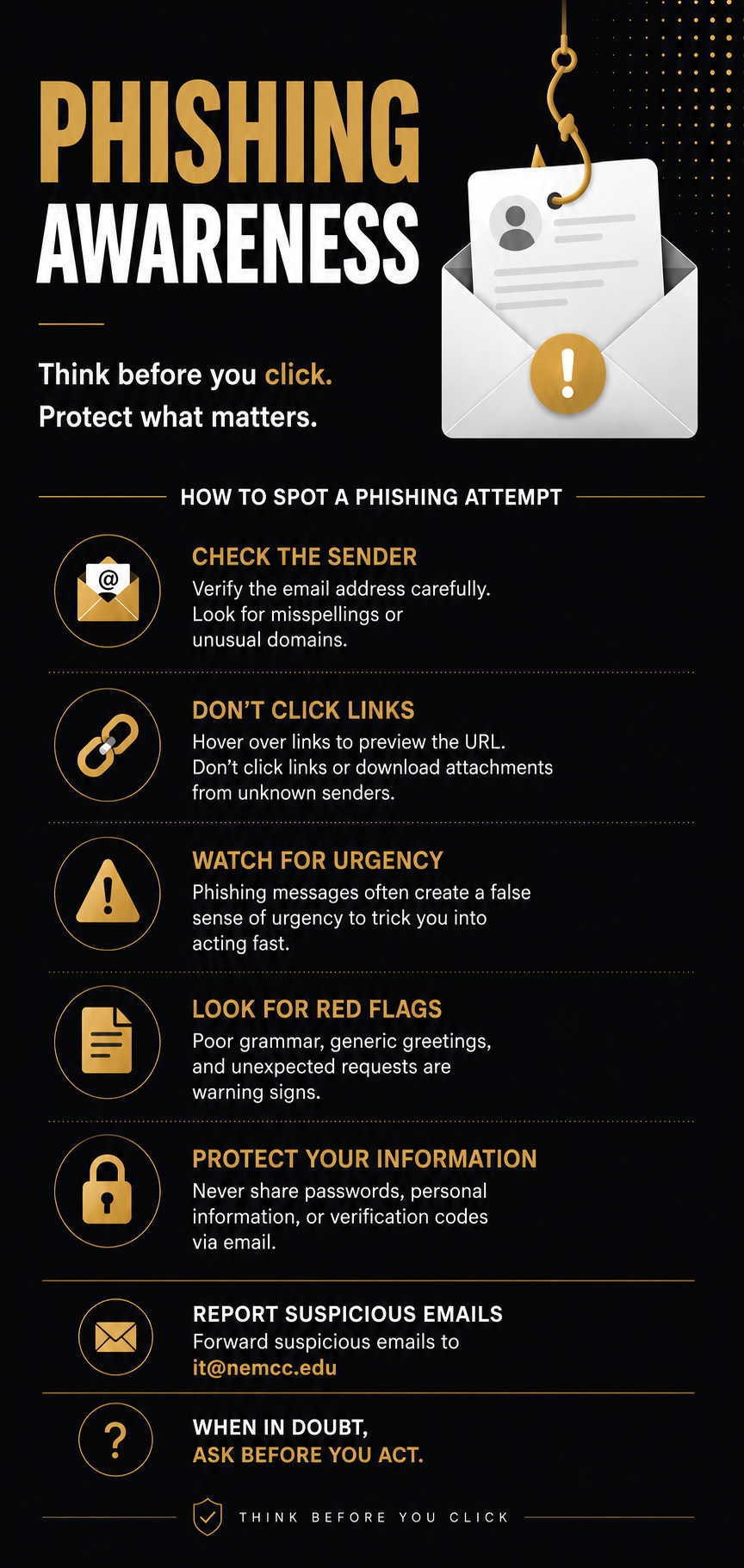
How to Recognize Phishing
Phishing messages are designed to create urgency, confusion, or trust. Watch for these warning signs before clicking links, opening attachments, or sharing information.
Suspicious Emails
- Unknown or unusual sender addresses
- Misspelled or fake domains
- Generic greetings like “Dear User”
- Poor grammar or unusual formatting
- Unexpected attachments or vague file names
Urgent Requests
- Pressure to act immediately
- Threats involving account suspension or penalties
- Requests for passwords or personal information
- Unexpected password reset or MFA requests
- Offers of money, prizes, or urgent financial help
How Phishing Scams Work
Phishing emails often look like they come from trusted organizations. They may link to fake websites designed to steal your information or install malware on your device.
Before You Click
Take a moment to evaluate messages carefully before opening links, attachments, or responding.
- Verify the sender’s email address carefully.
- Avoid clicking unexpected links or attachments.
- Hover over links to preview the destination URL.
- When unsure, go directly to the official website.
What To Do
If you receive a suspicious message, take the following steps to protect your account and information.
- Do not click links or open attachments.
- Never provide passwords or MFA verification codes.
- Do not reply to suspicious messages.
- Report suspicious emails to Information Technology Services.
Common Scams We See
Scammers often target students and employees using fake emails, urgent requests, and fraudulent login pages.
Financial Aid or Scholarship Scams
Fake emails offering grants or scholarships in exchange for personal information or payment.
Account Access or Email Deactivation Scams
Messages claiming your Northeast email account will be disabled unless you verify your password or account information immediately.
Fake Job or Work-Study Offers
Scammers offer remote jobs or work-study positions to collect banking information or credentials.
Fake Package Delivery Messages
Messages claim there is a shipping issue and include a suspicious tracking link.
Password Expiration Notices
Emails claiming your password will expire unless you click a link and sign in immediately.
Fake Microsoft 365 or Canvas Login Pages
Fraudulent login pages designed to steal Northeast usernames, passwords, and MFA approvals.
Think You Clicked a Suspicious Link?
If you entered your password, approved an unexpected MFA request, downloaded a file, or clicked a suspicious link, take action immediately to help protect your Northeast account and personal information.
- Change your Northeast password immediately.
- Deny unexpected MFA approval requests and review recent sign-in activity.
- Report the suspicious email or message to Information Technology Services.
- Run a malware or antivirus scan if you downloaded attachments or software.
- Contact ITS immediately if you are unsure what information may have been exposed.